If you’ve ever brought a new product idea to life—maybe a sleek kitchen gadget, a medical device component, or a kid’s toy—you know how frustrating it is to wait weeks, or even months, for a single working sample. That’s where rapid plastic prototyping comes in, and as someone who’s run a rapid plastic prototyping supplier for the past 12 years, I’ve seen first-hand how this game-changing service turns “concept” into “ready for production” faster, cheaper, and with far fewer missteps than traditional prototyping methods. Let’s break down the real, practical advantages that make rapid plastic prototyping non-negotiable for inventors, startups, and established manufacturers alike. Rapid Plastic Prototyping
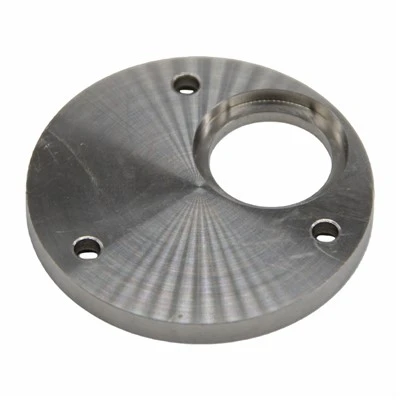
First, let’s get one thing straight: rapid plastic prototyping isn’t just “fast printing”—it’s a suite of precision-driven services, including CNC machining, 3D printing, vacuum casting, and injection molding for small batches, all tailored to turn your digital CAD file into a physical part in days, not months. Unlike traditional custom prototyping, which relied on hand tools and long lead times from specialized machine shops, rapid prototyping leverages automated software and scalable equipment to cut out unnecessary steps. For startups working on a fresh product idea, this speed is make-or-break. Imagine a team of 3 mechanical engineers who designed a portable water purifier: two years ago, they’d have waited 8 weeks for a prototype via traditional methods, missed a industry trade show deadline, and lost early pre-orders. With rapid prototyping, they had a fully functional sample in 5 days, let them test ergonomics, fit with mating parts, and adjust design flaws before investing in full-scale production molds. That’s not just speed—it’s competitive agility.
Next, rapid plastic prototyping reduces costs drastically, even for small volumes. Traditional prototyping often required paying for custom tooling, single-use molds, and skilled labor for manual adjustments, which could run into thousands of dollars for a single test part. With rapid methods, you only pay for the material, machine time, and post-processing labor for the exact part you need. For example, a medical device client I worked with last year needed 10 prototype parts of a surgical tool handle. Traditional molding would have cost them $12,000 in mold tooling alone, plus $500 per part. Using rapid CNC machining, they paid $1,800 total—less than a sixth of the traditional cost—while still getting a part made from the same medical-grade polypropylene their final product would use. That’s a huge win for teams working on tight budgets, especially when you consider that 30% of new product designs fail during prototyping phase; why sink money into expensive tooling before you’ve even confirmed your design works?
Beyond speed and cost, rapid plastic prototyping delivers unmatched design flexibility and precision. Modern rapid machines can handle complex geometries that traditional methods can’t pull off—think undercuts, lattice structures, or integrated hinges that would require multiple separate parts if machined conventionally. A client in the consumer electronics space came to me with a smart speaker base design that required a hollow, curved interior to hide wiring and a textured outer surface for grip. Traditional injection molding would have required a two-piece mold, adding assembly steps and potential fit issues. With rapid vacuum casting, we produced a single part in 7 days that matched the exact CAD specifications, with no extra assembly needed. That precision also translates to functional testing: you can make prototypes from the same materials your final product will use, so tests for durability, heat resistance, or chemical compatibility are far more accurate than if you used a cheap, low-grade prototype material. For aerospace clients, this is critical: a prototype of a satellite component has to perform in extreme temperatures, so we use PEEK—a high-performance plastic—for rapid prototypes that can withstand the same conditions as the final flight part, no guesswork required.
Another often-overlooked advantage is the ability to iterate quickly, which cuts down on long-term design risks. When you can get a prototype in a few days, you can run tests, get feedback from your team or focus groups, and adjust your design immediately—no waiting for weeks to see if a change worked. Last year, a toy manufacturer came to me with a prototype of a soft interactive doll’s head; during testing, kids mentioned the facial features were too small to grab. We adjusted the CAD file, produced a revised prototype in 3 days, and confirmed the fix in another 2 days. If they’d used traditional methods, this single iteration would have taken 6 weeks, pushing their product launch back a quarter and costing them hundreds of thousands in missed sales. Rapid prototyping turns design flaws into quick fixes, so you don’t end up launching a product that has to be recalled or revised months later. This is especially important for industries with strict regulatory requirements, like medical devices. The FDA requires extensive testing of prototypes, and rapid prototyping lets you refine your design as needed without falling behind on compliance timelines. For a client developing a new insulin pen component, we were able to test 4 different prototype designs for leak resistance, material biocompatibility, and ease of use over 3 weeks, which let them submit their FDA application on schedule—something that would have been impossible with slower prototyping methods.
I also can’t talk about advantages without mentioning quality control and consistency. While rapid prototyping sounds like a tech-heavy process, it’s rooted in repeatable, automated systems that produce the same part every time. Once your CAD file is set, the machine follows those specifications exactly, so you don’t get the variations that come with hand-tooled prototypes. For automotive clients, this consistency is key: a door handle prototype has to fit perfectly every time to ensure it works with the locking mechanism. With rapid CNC machining, our clients get uniform parts, so they can test multiple units without worrying that one is an outlier from a manual machining error. Plus, rapid prototyping supports small, low-volume runs, which is perfect for niche products or initial market testing. A lot of people assume injection molding is only for mass production, but modern rapid plastic prototyping includes low-volume injection molding for 20 to 100 parts, which is ideal for startups that want to test their product with early customers before committing to a 10,000-part mass production run. That way, you don’t tie up capital in excess inventory if your product doesn’t resonate, and you can adjust the design based on early user feedback before scaling up.
Of course, no service is perfect, but the advantages of rapid plastic prototyping far outweigh any limitations, especially when you work with a reliable supplier who understands your industry’s needs. The key is choosing a supplier that doesn’t just offer speed, but also expertise: we’ve worked with clients in medical, aerospace, consumer goods, and automotive, so we know how to source the right materials for your prototype, whether it’s food-grade plastic, high-temperature resin, or transparent acrylic. We also handle every step, from 3D model review to post-processing (like sanding, painting, or adding texture), so you don’t have to coordinate multiple vendors.

At the end of the day, rapid plastic prototyping isn’t just a service—it’s a tool that turns product ideas into reality without the wasted time, money, and risk that comes with traditional prototyping. If you’re ready to turn your concept into a tangible, testable prototype without the long waits and high costs of old-school methods, we’re here to help. Reach out to start a conversation about your project, no matter how big or small.
5-Axis CNC Machining References
- Gibson, I., Rosen, D. W., & Stucker, B. (2015). Additive Manufacturing Technologies: 3D Printing, Rapid Prototyping, and Direct Digital Manufacturing. Springer.
- Groover, M. P. (2020). Fundamentals of Modern Manufacturing: Materials, Processes, and Systems. John Wiley & Sons.
- American Society of Mechanical Engineers (ASME). (2022). Standards for Additive Manufacturing and Rapid Prototyping.
- Medical Device and Diagnostic Industry (MDDI). (2021). Rapid Prototyping for Medical Device Development: Best Practices and Regulatory Considerations.
- Automotive Research Association of America (ARAA). (2023). Low-Volume Prototyping in Automotive Product Development: Cost and Time Analysis.
Shenzhen Multi-Wins Precision Technology Co., Ltd.
As one of the most professional rapid plastic prototyping manufacturers and suppliers in China, we have world-leading production equipment and strong manufacturing capabilities. Please feel free to buy customized rapid plastic prototyping made in China here from our factory. Also, quotation is available.
Address: 1 Phase, Yi’an City Central Garden, Longfei Avenue, Longgang District, Shenzhen, GD, China. 518100
E-mail: info@multi-wins.com
WebSite: https://www.multi-wins.com/
