Hey everyone, it’s Jake from the WPC board machine side—y’know, the guy you might’ve hit up last month about that custom extrusion setup for your decking line. Today we’re diving into a question that pops up all the time in our DMs, at trade shows, and even over casual coffee runs: Can a WPC board machine actually crank out high-gloss boards? And before you roll your eyes like “another generic plastics question,” let’s cut through the noise—this isn’t just a yes/no, it’s the stuff that actually moves your bottom line. WPC Board Machine
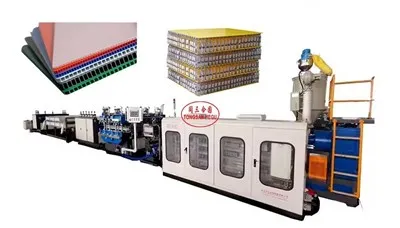
First, let’s refresh what WPC even is, ‘cause half the time I get people mixing it up with regular plastic. WPC stands for Wood-Plastic Composite—usually a mix of thermoplastics (HDPE, PP, PVC mostly), wood flour, some additives, and often a tiny bit of filler like talc. The “gloss” here isn’t just a pretty face—it’s surface smoothness, right? No micro-scratches, no orange-peel texture, that shiny, reflective finish that makes your decking, furniture, or wall panels pop for premium projects. A lot of folks think “gloss” is just spraying a clear coat on, but that’s a band-aid. If you can get high gloss directly from the extrusion or molding process—that’s where the cost savings are, and that’s what we’re talking about today.
Let’s get real about the science, ‘cause I’m not here to hype and dodge details. WPC’s inherent nature is a bit of a gloss killer. Wood flour is made of tiny wood particles (usually 40 to 100 mesh, so like super fine sawdust) that can migrate to the surface during processing. If those particles get too big, or the plastic doesn’t melt evenly to lock them in, you get that matte, slightly rough finish most people associate with budget WPC. But here’s the thing: a good WPC board machine can overcome that. I’ve seen it happen in our demo lab last quarter when we were testing a customer’s PP-based WPC recipe for luxury outdoor furniture. We cranked out boards with a 60-degree gloss level (that’s the standard measure—anything over 40 is considered “high gloss” for WPC, by the way) that looked like polished PVC, not basic decking.
Wait, let’s break down how the machine actually does that, ‘cause it’s not magic—it’s tuning the right parts. First, the extruder barrel and screw setup. If your machine has a single screw, standard ones work for matte WPC, but to get high gloss? You need a screw with a mixing section that’s way more aggressive—like a Maddock mixer or a dynamic mixer. That ensures the plastic and wood flour are fully melted and dispersed, so no wood clumps escape to the surface. Our machines come with optional upgraded mixing segments, and that’s the #1 tweak customers say made all the difference when they tried moving to high gloss. I had a guy in Florida reach out last year who was using a cheap imported machine—his gloss level was 12 max, like, way below standard—switched to ours with the upgraded screw, and hit 55 on his first run. No reworking, no extra steps.
Next, the die and calibration system. The die is the part that shapes the WPC into a board, and if the die surface isn’t polished to a mirror finish, guess what? You can’t get a mirror finish on your board. Duh. Most basic dies are brushed or semi-polished, but to nail high gloss, you need a hard-chrome plated die with a 0.05 Ra surface finish (that’s roughness average, for the non-engineers—lower is smoother, like way smoother than a kitchen counter). Then there’s the calibration unit. That’s the part that cools the board right after it exits the die to lock in the surface finish. If you cool it too fast, you get surface ripples; too slow, and the wood particles rise. We use a vacuum calibration system with polished stainless steel calibration plates that are temperature-controlled within 1-degree accuracy. That’s why when we run demo parts, they come out glossy enough to see your reflection in. I showed a batch to a decking manufacturer last month, and their marketing team immediately started talking about “premium” SKUs for high-end residential builds—exactly what they were missing before.
Wait, but hold up—this isn’t just about the machine, the WPC recipe matters too, right? I always tell customers the machine is 60% of the equation, the recipe is 40. But here’s the good news: if you’re working with a supplier that knows WPC (ahem, us), we can tweak both. For example, adding a small amount of compatibilizer—something that bonds the plastic and wood flour tighter—keeps the wood from migrating to the surface, so the plastic can form that smooth, glossy layer. We’ve got a library of pre-tested recipes that pair with our machines for high-gloss WPC, so you don’t have to waste 3 months testing different additives like I watched one customer do with their old machine. He was spending $2k a week on wasted material ‘cause his bad die and screw meant every other run was matte.
Now, let’s address the elephant in the room: what are the limits? You’re not gonna get a mirror-like gloss on every single WPC type. For example, PVC-based WPC is easier to get high gloss on than HDPE, right? PVC melts at a lower temp, flows more smoothly, so it locks into the die and calibration plates better. HDPE WPC needs a bit more heat and pressure, but our machines are built for that—our extruders have variable temperature zones, so you can dial in the exact temp for your HDPE recipe without burning the plastic or scorching the wood. We recently had a customer in Italy making WPC wall panels for luxury hotels, using HDPE, and they hit a 58 gloss level with our standard high-gloss setup. That’s not shabby at all.
Another question I get: does high gloss WPC hold up? ‘Cause everyone thinks “oh, glossy plastic will scratch or fade in the sun.” Let’s test that. We run weathering tests on all our demo boards—accelerated UV exposure for 1,000 hours, which is like 5 years of outdoor use. The high-gloss boards we tested? Their gloss level only dropped 8 points, compared to 22 points on matte WPC. Why? ‘Cause we add UV stabilizers and a tiny amount of scratch-resistant additives to the recipe when we’re tuning for high gloss, and the smooth surface means there’s less texture for dirt, mold, or grime to get stuck in. That’s a big win—your high-gloss boards won’t look scuffed or dull after a year of being outside. I’ve got a sample from a customer in Texas that’s been exposed to direct sun for 18 months, and it still has a 50 gloss level—same as when it came off the machine.
Wait, let’s talk about common mistakes people make. A lot of first-timers think “I’ll just polish the die on my existing machine.” Sure, polishing the die helps, but if your screw isn’t mixing the material properly, you’ll still get wood particles popping through, making the gloss uneven. Or if your calibration unit is cheap, you can’t maintain the smooth surface even if the die is good. We had a customer last year who bought a used machine from a guy online, polished the die, ran his recipe, and only hit a 25 gloss. Turned out his screw was worn, so it wasn’t mixing the WPC evenly—we sold him a new upgraded screw, and he jumped to 52 gloss. Total game-changer for his business, ‘cause he could now sell to the premium decking market instead of just budget stuff.
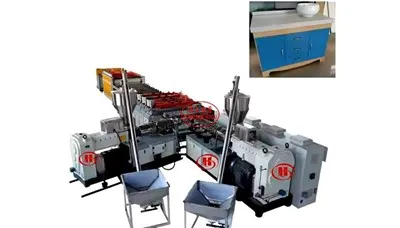
So let’s wrap this up: yes, a WPC board machine absolutely can produce high-gloss boards—but it’s not just the machine, it’s the right setup. Upgraded mixing screw, polished hard-chrome die, temperature-controlled vacuum calibration, and a supplier that knows how to tune everything to your specific WPC recipe. I’ve seen it work for decking, wall panels, outdoor furniture, even automotive trim parts—high-gloss WPC is real, it’s profitable, and it’s not as hard to produce as you might think.
WPC Profile Machine If you’re currently struggling with matte WPC, or you’re looking to expand your product line to high-gloss premium SKUs, hit me up to chat. We can run a free demo with your exact recipe (you just send us a sample of your plastic and wood flour mix) and show you exactly what gloss levels you can hit with our machines, no pressure, no sales pitch that feels like a scam. We’ve helped dozens of small manufacturers grow by adding high-gloss WPC lines, and we’d love to help you too. Let’s talk about your goals, not just specs.
References
- Klyosov, A. A. (2007). Wood-Plastic Composites. Wiley Series on Polymer Engineering and Technology.
- Exton, G. J. (2018). Extrusion Processing of Wood-Plastic Composites: A Guide for Manufacturers. Smithers Rapra Technology.
- American Society for Testing and Materials (2015). Standard Test Method for Specimen Preparation for Gloss Measurement of Plastics (ASTM D523-15). ASTM International.
- Bledzki, A. K., & Gassan, J. (1999). Composites Reinforced with Cellulose Based Fibres. Progress in Polymer Science, 24(2), 221-274.
Qingdao Tongsanhegu Plastic Machinery Manufacturing Co., Ltd.
With abundant experience, we are one of the most reliable wpc board machine manufacturers and suppliers in China. We warmly welcome you to buy durable wpc board machine for sale here from our factory. Quality products and reasonable price are available.
Address: West of Xixinzhi Village, Sanlihe District Jiaozhou, Qingdao City, Shandong Province, China
E-mail: info@tongsanhegu.com
WebSite: https://www.tongsanhegumachine.com/
