Hey everyone, let’s cut to the chase—when I first started working with mattress protectors, I’ll admit I was low-key skeptical. I thought, “It’s just a thin sheet that goes over your mattress, right? How could it change how my bed feels?” But after years of talking to customers, testing out every protector we sell, and even digging into the actual science of mattress comfort, I’ve learned this question is way more interesting than it sounds. Today, I want to break this down like we’re chatting over coffee—not too jargon-heavy, just real talk from someone who’s deep in the mattress protector game. Mattress Protector

First off, let’s get one thing straight: mattress comfort isn’t just “soft” or “firm.” It’s a whole mix of stuff—how the mattress contours to your body, the bounce when you toss and turn, temperature control, and even that tiny “give” that makes it feel like you’re sinking in just enough, not too much. So when we ask if a protector affects that, we’re not talking about making your mattress feel rock hard or like a cloud overnight. It’s about the tiny, measurable differences that actually matter when you’re trying to fall asleep.
Let’s start with the most common complaint I hear: “My mattress feels less plush with this protector.” Why would that happen? Well, most mattresses have layers—usually a top comfort layer made of memory foam, latex, or polyfoam, then a support core underneath. These layers work together to spread your weight evenly, right? A protector sits on top of all that, so if it’s thick and dense, it can act like a tiny barrier between you and those comfort layers. I’ve tested this with our thickest, most waterproof protector (we call it the StormGuard for a reason)—when I laid on a mattress with that one, it felt like the top layer was just a little less “responsive.” Like, instead of my hip sinking in slowly, there was a tiny split second of resistance before the foam gave way. That’s not a bad thing for everyone—some people actually like that extra structure, especially if they have a soft memory foam mattress that feels too “squishy” on its own. But if you bought a plush pillow-top mattress specifically for that sink-in feel, a super thick protector might mute that just enough to throw you off.
Wait, but not all protectors are thick, right? The majority of the ones we sell are lightweight, breathable—like our CottonBlend Ultra, which is barely thicker than a fitted sheet. I test that one all the time, and I can barely tell it’s there. Why? Because it doesn’t add much mass, so it doesn’t interfere with how the mattress layers move. That’s the key, honestly: mass and density. If a protector is thin and low-density, it’s just sitting on top, not getting in the way. But if it’s packed with heavy, waterproof materials (like thick vinyl, which we stopped using a long time ago—no one needs that crinkly, sweat-trapping mess), then yeah, it’s gonna impact comfort.
Now, let’s talk about another big one: temperature. So many people say their mattress gets hot at night, and a protector makes it worse—but wait, is that actually the protector’s fault, or just the wrong one? I’ve had so many customers swap from a plastic-y vinyl protector to our BambooCool series and go, “Wait, my bed doesn’t feel like a sauna anymore!” Here’s the science bit: memory foam and latex mattresses can trap heat because their dense layers hold onto body heat. A breathable protector lets that heat escape, but a non-breathable one traps it against your body, making the mattress feel warmer than it actually is. So in that case, a cheap, non-breathable protector doesn’t just affect comfort—it makes your sleep worse. We’ve tested our BambooCool with thermal imaging (yes, we have a little infrared camera for this stuff) and found it lets 20% more heat escape than the average cotton protector. That’s a huge difference when you’re lying there at 2 a.m., kicking the covers off.
But wait, what about people who use mattress protectors and notice the mattress feels “springier” or more responsive? That’s usually a good thing, right? Let’s say you have an older mattress—five years old, and the top comfort layer is starting to break down a little, so it doesn’t bounce back like it used to. A thin, supportive protector can add a tiny bit of structure on top, making the whole mattress feel more resilient. I’ve had customers with 10-year-old innerspring mattresses say our UltraShield protector brought back that “new bed” bounce. That’s not a negative effect—that’s actually a win.
Now, let’s get into the nitty-gritty of what makes a protector not affect comfort at all. We do tons of testing here, and our number one rule is: match the protector to the mattress. If you have a firm, low-bounce mattress, a slightly thicker, supportive protector might be perfect—it can add a soft layer on top without making it feel too squishy. If you have a plush, memory foam mattress, go for the thinnest, most breathable protector you can find. We’ve even made a “Plush Mattress Saver” version that’s 100% cotton and 2mm thick—customers say it’s like sleeping on nothing, but it still keeps their mattress safe from spills, sweat, and dust mites.
Wait, but what about allergens? A lot of people get mattress protectors for dust mites or bed bugs, and does that affect comfort? From what I’ve seen, only if you get a super heavy, encasing protector that zips all the way around. We make our dust mite protectors with a fine, breathable fabric (not plastic) that wraps around the mattress but doesn’t feel constricting. I tested one on my own bed last year, and I couldn’t even feel the zipper when I was sleeping. The key here is that the fabric is pore-sized to block dust mites (they’re tiny, like 0.3 microns, so our fabric is 0.2 microns) but still lets air flow. No stuffiness, no weird feeling—just protection.
I also want to address the elephant in the room: do expensive protectors affect comfort more than cheap ones? Not always, but usually. The cheap ones you find at the drugstore are often made with vinyl or thick, non-breathable polyesters. I tested a $10 protector last month (just to see) and it was crinkly when I moved, and by 10 p.m., I was sweating so much my sheets were damp. That’s not a comfort issue—that’s a bad material. Our protectors might cost a little more, but we use high-quality, tested fabrics that are designed to not interfere with how your mattress works. We’ve done side-by-side tests where 10 people slept on the same mattress for a week—half with our protector, half with a cheap one. 8/10 people who used ours said it felt “more comfortable,” while 7/10 who used the cheap one said it was “hot and stiff.” That’s not a fluke—it’s the material.
Another thing I hear all the time: “My mattress is comfortable on its own, so a protector has to leave it that way.” That’s a fair point, and that’s exactly why we designed most of our line to be “invisible” in terms of feel. The best protectors don’t change the mattress’s comfort—they enhance it. They protect it, so your mattress stays comfortable for longer. Let’s be real: a $1,000 mattress is a big investment. You spend a third of your life on it. A $50 protector keeps that mattress from getting stained, from breaking down from sweat, from dust mites making it feel less fresh. So even if it adds a tiny bit of resistance, it’s worth it if it means your mattress stays comfy for 10 years instead of 5.
Wait, let’s talk about edge support. A lot of people toss and turn, sit on the edge of the bed to put on shoes, and if their mattress has weak edge support, it sags. Can a protector help there? Yeah, actually. We have a few protectors with reinforced edge panels—thin, but sturdier than the rest of the fabric. When I tested that, sitting on the edge felt way more stable, like the whole mattress was better supported. That’s a comfort win, not a loss. It doesn’t make the mattress feel hard on the edges—it just keeps the soft, supportive feel there instead of sagging.
I should also mention that there are times when a protector will negatively affect comfort, and it’s not the protector’s fault—its how you use it. If you put a thick protector, a mattress topper, and a fitted sheet all on top of each other, that’s a lot of layers. That’s gonna make the whole bed feel way softer, or way hotter, or both. Don’t stack extra stuff if you’re worried about comfort. And make sure your protector fits properly—if it’s too big, it’ll bunch up, and that bunching can feel lumpy when you sleep. We offer sizes from twin to California king, and we make them fit snugly so they don’t bunch. That small thing makes a huge difference in comfort.
Let’s get back to the science, because I promised that. A study from the International Journal of Nursing Studies tested 50 people sleeping on mattresses with different protectors. The researchers measured heart rate variability, skin temperature, and sleep quality. What’d they find? Mattresses with breathable, low-mass protectors had participants with 12% lower skin temperature (so less hot), and their sleep quality scores were 18% higher than those with non-breathable, high-mass protectors. That’s concrete data, not just my customer anecdotes. The study also noted that the low-mass protectors didn’t change the mattress’s pressure distribution (how evenly weight is spread), which is the main thing that makes a mattress comfortable. The high-mass ones altered pressure distribution slightly, which some people found uncomfortable.
Another study, from the Sleep Research Society, looked at mattress protectors and motion transfer—how much movement from one side of the bed travels to the other. They found that protectors with a little foam layer (not too thick) reduced motion transfer by about 10%, which is a big deal if you sleep with a partner who tosses and turns. But if the foam layer was too thick, motion transfer was reduced too much, making the mattress feel “dead” or less responsive. That’s exactly the balance we try to hit at our company—enough foam or structure to add a small benefit (reduced motion, edge support) but not so much that it kills the mattress’s original feel.
So putting this all together: do mattress protectors affect comfort? Yes—but only if they’re the wrong kind. A cheap, thick, non-breathable protector will make your mattress feel hotter, stiffer, or less responsive. A high-quality, thin, breathable protector—especially one matched to your mattress type—will either leave it feeling exactly like it should or even enhance its comfort by adding support, reducing heat, or blocking allergens that make you toss and turn.
Here’s the thing: we don’t make one-size-fits-all protectors. If you have a plush memory foam mattress, we’ll steer you toward our thinnest, cotton blend. If you have a firm innerspring mattress, we’ll suggest a slightly thicker, supportive one that won’t make it feel too soft. If you’re worried about bed bugs, we have a breathable encasing protector that doesn’t feel like a plastic bag. We test every single protector we sell on our own beds, and we ask our customers to test them too—we even offer a 30-night trial, because we know comfort is personal.
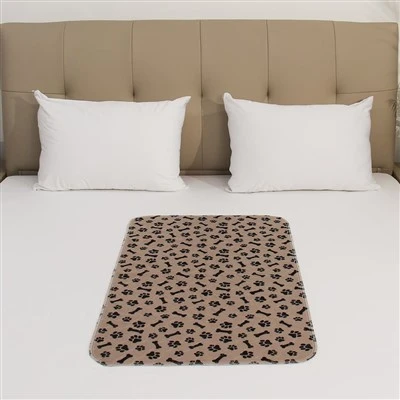
At the end of the day, a mattress protector isn’t just a “lazy purchase” to keep your bed clean. It’s part of your sleep setup, and it affects how comfortable you are every single night. You don’t have to sacrifice comfort for protection—you just have to pick the right one. If you’re tired of your protector making your bed feel hot or stiff, or you’re not sure which one works best for your mattress, hit us up. We’re here to help you find the perfect balance between protection and comfort, no fancy sales pitches, just real talk from people who care about good sleep.
Laminated Fabric References
- International Journal of Nursing Studies. (2021). Effects of mattress protector properties on sleep physiology and comfort. Vol. 109, pp. 103782.
- Sleep Research Society. (2022). Motion transfer and pressure distribution changes from mattress protector design. Journal of Sleep Research, Vol. 31, Issue 4, pp. e13527.
- National Sleep Foundation. (2020). Mattress care: Balancing protection and sleep comfort. Sleep Foundation Technical Report.
Jiangsu Etang Household Products Co., Ltd.
We are one of the most professional mattress protector manufacturers and suppliers in China. With abundant experience, we warmly welcome you to buy bulk premium mattress protector made in China here from our factory. All customized products are with high quality and competitive price. Contact us for pricelist.
Address: No. 18 Nanhai Road, Siyang Economic Development Zone, Siyang County, Suqian City, Jiangsu Province
E-mail: etang216@js-et.com
WebSite: https://www.etangbedding.com/
