As a PP woven bag supplier who has spent the last 12 years in this industry, I’ve seen first-hand how a small quality misstep can turn a client’s bulk order into a disaster. Last year, a small construction company reached out to us after a prior supplier sent 50,000 PP woven bags that tore under a 50kg load of cement halfway to a job site. They’d lost materials, faced project delays, and nearly lost a major client—all because no one did rigorous quality control (QC) during production. That experience stuck with me because PP woven bags aren’t just generic packaging; they’re critical for moving construction materials, agricultural goods, chemicals, and even food-grade products. If your QC is sloppy, it doesn’t just hurt your brand—it creates real problems for the people relying on your bags. Today, I’m pulling back the curtain on how our team builds QC into every stage of PP woven bag production, from raw material inspection to final packing, because this isn’t just my job—it’s how we honor the trust our clients put in us. PP Woven Bag

Let’s start with the foundation: raw material QC. A PP woven bag is only as strong as its plastic resin, and cutting corners here is the fastest way to end up with faulty bags. I’ve walked too many production floors where suppliers use reprocessed, low-grade resin to cut costs, and the results speak for themselves—bags that fade after one week in sunlight, or break when folded during transport. For our team, we never skip a single test on every batch of virgin PP resin we receive. First, we do a visual inspection: no yellow tint, no visible streaks of leftover recycled plastic, no chunks of hardened residue. Then we run a melt flow index (MFI) test. MFI measures how easily the resin melts during extrusion, and PP resin for woven bags needs a specific MFI (between 3 and 5 g/10min, per industry standards) to ensure the filaments spin evenly. Too high, and the filaments are too thin; too low, and they’re brittle. We also test for tensile strength right on the raw material line—pulling a small resin sample to measure how much force it can withstand before breaking. If a batch fails, it goes straight back to the supplier, no exceptions. Last quarter, a new resin shipment came in with an MFI of 6.2, and our team flagged it immediately—if we’d used that, the bags would’ve torn 20% earlier than our required 15kg tensile strength minimum. That’s not a loss; it’s protecting our clients’ bottom line.
Next, the extrusion and weaving stage, where raw resin turns into the woven fabric that forms the bag’s body. This is where a lot of QC teams drop the ball—they check a few random rolls at the end, but we do real-time checks every 15 minutes during production. Extrusion is the process of melting PP resin into thin filaments, then stretching and cooling them to make strong weft and warp threads. If the temperature in the extruder is off, the filaments will be too thick or too thin. We have a dedicated QC technician stationed at the extruder at all times, checking the filament diameter with a micrometer every 15 minutes. The ideal diameter for our standard construction-grade bags is 0.03 to 0.04 mm; if it drifts even 0.005 mm, we adjust the machine immediately. Then comes the weaving stage, where the filaments are woven into a flat fabric. Here, the QC team checks the fabric’s “mesh count” (number of threads per square inch) and the uniformity of the weave. Too few threads, and the bag will be porous enough to let fine cement dust seep through during transport; too many, and it’s unnecessarily heavy, adding to logistics costs. We also do a slip test here—rubbing two pieces of the woven fabric together to ensure it doesn’t fray, which would lead to holes in the finished bag. Last month, a weaving machine’s shuttle malfunctioned, creating a gap in the weave on a roll of fabric. Our technician caught it in the middle of the run, pulled the faulty roll, and avoided hundreds of defective bags that would’ve been caught only after full production.
Once the fabric is ready, we move to the cutting and stitching stage—this is where the bag takes its final shape, and even a small mistake here can render an entire order useless. Cutting QC is straightforward: we measure the dimensions of every cut piece to ensure they match the client’s specifications. A 50kg agricultural bag needs to be 75cm tall and 45cm wide, for example; if it’s even 1cm too short, it won’t hold the full grain, and if it’s too narrow, it can’t stack properly in a truck. We check 20 random cut pieces per production run, and if one is off, we check 10 more to rule out a machine calibration issue. Stitching is the area where human error is most common. A bad stitch—too loose, too tight, or with skipped threads—can cause the bag to split open when loaded. Our QC team checks every 50th bag for stitching quality, but we also have a “load test” for every batch of finished bags at this stage. We fill test bags with a weight 20% higher than the client’s maximum load (for a 50kg bag, that’s 60kg) and hang them for 10 minutes. If the stitching holds, we move forward; if it snaps, we adjust the machine’s thread tension or repair skipped stitches. A few months ago, a batch of bags failed this test because the machine’s needle broke mid-run, skipping 12 stitches along the bottom seam. Our team caught it before the bags even went to printing, saving the client a $12,000 loss on a large grain shipment.
Printing is another often-overlooked QC step, especially for food-grade or chemical-grade bags where print quality isn’t just about branding—it’s about safety. For food-contact PP woven bags, we use water-based inks that are non-toxic, so first we test every ink batch for heavy metal content (lead, cadmium) to ensure they meet FDA food safety standards. For non-food bags, we use solvent-based inks, but we still check for adhesion. If the print smudges off when the bag is rubbed, it’s not just unprofessional—it can get into the product inside. We also check for alignment: text, logos, and warning labels need to be centered, not shifted, and free of typos. Last year, a new client noticed a typo in a “UV-protected” warning on their bags—turning “UV” into “VI” because of a printing plate mistake. Our QC team caught it before the order shipped, and we reprinted 10,000 bags overnight to make the deadline. That mistake could’ve cost the client their retail partners, who would’ve rejected the bags for misbranding. We also do a fade test here for outdoor-use bags: leaving a printed sample in UV light for 72 hours to ensure the ink doesn’t fade, which is critical for agricultural bags exposed to sun during transport and storage.
Finally, before shipping, we do a full “batch load test” and a random sampling audit to make sure every bag meets our standards. The load test is non-negotiable: we pick 50 random bags from the full batch, fill them with the client’s required maximum weight, and drop them from 1.5 meters (a standard drop for testing transport durability) three times. If even one bag tears, the entire batch is re-inspected, and we adjust our production settings. This test mimics the rough handling bags get on trucks, warehouses, and job sites, so it’s the final check to make sure the bags won’t fail after leaving our facility. We also do a count and weight audit: ensuring the number of bags matches the order quantity, and that the average weight per bag is within a 5% tolerance (too light, and it’s missing reinforcement; too heavy, and it’s adding unnecessary cost). We also check the packaging—bags should be folded neatly, stacked without creases that could weaken them during storage, and wrapped in plastic to keep them dust-free.
I know a lot of suppliers cut corners on QC to keep costs low, but I’ve learned over 12 years that this is a false economy. A client might save a few cents per bag with a cheaper supplier, but if those bags tear mid-transport, they’ll lose far more in material, time, and reputation. Our QC process isn’t just a set of rules—it’s built around listening to what our clients actually need. A farmer needs bags that won’t tear when filled with corn, a construction manager needs bags that won’t leak cement dust, a food processor needs bags that won’t contaminate rice. We tailor our QC checks to each client’s use case, not just use a one-size-fits-all checklist.
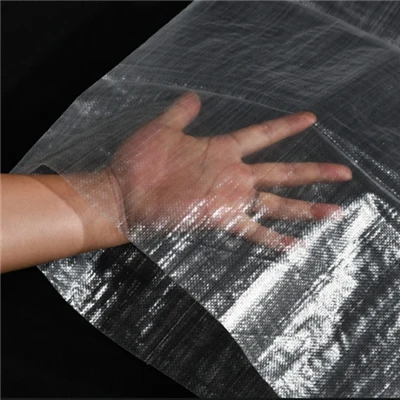
At the end of the day, quality control isn’t just about avoiding mistakes—it’s about building trust. If you’re looking for a PP woven bag supplier that cares as much about your product’s success as you do, don’t hesitate to reach out to discuss your production needs, custom specifications, and quality requirements. We’re here to walk through our process with you, answer your questions, and make sure every bag that leaves our facility is one your team can rely on.
Weed Control Fabric Sheet References:
- "Polypropylene Woven Bags: Manufacturing and Quality Standards" – International Plastic Federation, 2022
- "Tensile Testing of Polypropylene Filaments for Packaging Materials" – Journal of Packaging Technology, Vol. 45, No. 3, 2021
- "Food-Grade Plastic Packaging Safety Guidelines" – U.S. Food and Drug Administration, 2023
- "Woven Bag Weave Uniformity and Durability Testing Protocols" – Global Packaging Association, 2020
Linyi Dongyi Import&Export Co., Ltd.
As one of the most professional pp woven bag manufacturers and suppliers in China, we offer a wide range of products with superior quality. We warmly welcome you to wholesale bulk customized pp woven bag from our factory. If you have any enquiry about quotation, please feel free to email us.
Address: 4 F, Zone A, Zhangjia Zhuxu Village, Lanshan District, Linyi City.
E-mail: donglai01972@gmail.com
WebSite: https://www.donglaipack.com/
