Hey there, if you’ve ever stared at a pile of knit and woven fabrics side by side in our factory floor, you’ve probably thought this exact question: can we grab the same interfacing for both? As a supplier that handles both knit garments (think soft tees, stretchy hoodies, that cozy jogger set you grab after work) and woven pieces (structured shirts, dresses, blazers that hold their shape), I get this question at least twice a week from our clients—small boutique owners and big brand buyers alike. Spoiler: it’s not a simple yes or no, and using the wrong interfacing is where so many of us mess up. Let’s break this down like we would over a coffee during a late-night production crunch, no fancy jargon (okay, maybe a tiny bit of fabric science that’s actually useful, not just textbook stuff). Knit And Woven Garments

First, let’s remember what interfacing actually does. It’s that hidden layer between your main fabric and the lining (or just between two layers) that adds structure, support, or prevents stretch where you need it—like a collar, cuffs, waistband, or placket. The whole point is to stop that part from flopping, stretching out, or looking limp after a few wears. Now, knit vs. woven fabrics are basically opposites in how they move, right? Wovens have threads that cross at right angles—over, under, over, under—so they stretch very little, mostly along the bias (the diagonal grain). Knits, on the other hand, are made of interlooped threads, like a chain of stitches, so they stretch everywhere: along the length, width, bias, even bounce back a little. That stretch difference is why you can’t just grab the same interfacing for both, unless you know exactly which type of interfacing works for each, and when they cross over.
Let’s start with woven garments because that’s where a lot of people go for the easiest go-to interfacing. The most common woven interfacings are things like fusible non-woven (made of loose fibers pressed together with glue) or woven interfacing (like lightweight cotton or even polyester fabric woven specifically to be stable). For a woven dress shirt collar? A lightweight woven cotton fusible interfacing works great—it matches the woven fabric’s stretch, adds enough stiffness to hold the collar stand up without making it board-like. For a blazer lapel? A medium-weight woven interfacing or even a hair canvas (the stiffer stuff) keeps that lapel rolling nicely, not flopping over. The key here with woven garments: interfacing for wovens is designed to have almost zero stretch, because your main woven fabric doesn’t stretch much either. If you use a stretchy knit interfacing on a woven, it’ll pucker or pull, especially around curved edges like a placket—you’ve definitely seen that shirt collar that’s all wavy after the first wash, that’s why.
Now knit garments. This is where a lot of new suppliers (or even old ones cutting corners) mess up. Knits need interfacing that has give—enough stretch to move with the fabric, not against it. If you use a woven interfacing on a knit collar? By the end of the day, that collar will be curling up at the edges, because the knit is stretching around your neck, and the non-stretchy woven interfacing is fighting it. The most common knit interfacings are fusible knit interfacing (made of tiny interlooped threads, same basic structure as a t-shirt) or even lightweight tricot knit (used for stretchy linings sometimes, but as interfacing it’s perfect for cuffs and waistbands). Wait, but here’s the thing I wish every buyer knew: not all knit interfacings are equal. If your knit garment is a heavy one, like a structured knit blazer, you need a medium-weight knit interfacing, not the super lightweight stuff you’d use for a baby tee collar. I’ve seen clients grab the cheapest knit interfacing for a line of tailored knit blazers, and within two washes, the lapels lost all their shape—total waste of fabric and time.
But here’s where the line blurs, and you actually can use the same interfacing for both—sometimes. Let’s talk about that crossover moment. When does one interfacing work for knit and woven? It’s all about the stretch percentage. Most interfacings have a stretch rating, usually listed as “percent stretch along the grain and across the grain.” If you can find an interfacing that has a stretch of around 15-20% along the length (standard for most medium-weight knits) and less than 5% stretch along the cross-grain (so it doesn’t pucker against woven fabric), that’s your unicorn. Wait, is that even a real thing? Yeah, we’ve tested a few over the last year. We used it for a line of mixed sets: a woven button-up top (structured placket, collar) and a knit jogger with a woven waistband. The interfacing we picked had cross-grain stretch low enough for the woven placket, and lengthwise stretch enough for the knit waistband. No pucking on the woven, no curling on the knit—our client loved it. But that’s only for specific parts, not for the whole garment. You’d never use that same interfacing for a knit hoodie’s collar and a woven suit’s lapel, for example.
Wait, another big mistake people make: fusible vs. non-fusible interfacing. A lot of folks assume fusible is the only way, because it’s faster (iron it on, no sewing needed). But fusible interfacing has glue on one side, and the glue’s quality matters a ton for both knit and woven. For knits, you need fusible knit interfacing with a low-temperature glue—if you use high-temp glue, especially on stretchy knits, the glue will break the fibers, and the interfacing won’t stretch anymore. For wovens, you can usually use medium-temp fusible woven interfacing, but if you’re working with a delicate woven like silk, you need a lightweight silk fusible interfacing, no exceptions. Non-fusible (sewn-in) interfacing is always safer for tricky fabrics, but it’s more work, so a lot of brands skip it to save time. I get it, time is money, but cutting corners on interfacing is why garments end up getting returned.
Let’s use real examples from our factory, because numbers and stories hit harder than textbook stuff. Last year, a small boutique client came to us with a rush order: 500 woven cotton blouses and 500 jersey knit blouses, all with the same “classic pointed collar” design. Initially, they told us to use “generic woven interfacing” for all. We pushed back, did a small test batch: the woven blouses had great collars, but the knit ones? The collars curled so bad, the product photos looked like mistakes. We swapped the knit collars to lightweight knit fusible interfacing, and the woven ones stayed with the woven interfacing—cost them an extra $0.12 per blouse, but they sold out in 2 weeks, vs. the first test batch which only sold 10% because of the bad collars. Another example: a big sportswear brand we work with makes both woven track jackets and knit joggers. For the waistband on both, we use that stretchy woven interfacing I mentioned earlier—low cross-grain stretch for the woven jacket’s waistband, enough lengthwise stretch for the knit jogger’s. That’s the sweet spot where you can reuse a roll of interfacing, save on inventory, and still get a great end product.
What about when someone insists on using the same interfacing for everything? We had a client last quarter who brought in a bunch of stretch woven (wait, yes, stretch wovens exist—think stretch denim or stretch cotton sateen) and regular cotton knits, and tried to use the same non-woven interfacing for both. The stretch woven is somewhere between knit and woven, right? It has a tiny bit of give, so the non-woven interfacing worked okay for it, but the regular cotton knit? The non-woven was way too stiff, and the collar stretched out after one wear. We talked them into switching to a light knit interfacing for the knits, and kept the non-woven for the stretch wovens—again, a tiny cost difference, but the feedback from their customers went from “love the style” to “love how this fits for months.”
Here’s the rule of thumb we live by in our factory, no matter what the client says:
- For 100% non-stretch woven garments (woven shirting, non-stretch blazer fabric): Use woven interfacing (low stretch, matched to fabric weight) or heavy non-woven if the client wants it. No stretchy stuff here.
- For stretch wovens, regular knits, jersey knits: Use knit interfacing (stretch matched to the fabric, weight matched to the part—light for collars, medium for waistbands/lapels).
- If you absolutely have to reuse interfacing rolls (inventory tight, rush order): Pick an interfacing with cross-grain stretch <5% and lengthwise stretch 15-20%—test it on a scrap first, always. Iron it on, wear it around for a day, wash it once. If it doesn’t pucker on woven or curl on knit, you’re good.
- Always test interfacing scraps first. I don’t care if you’re making one garment or 10,000—test a scrap. We have a bin of interfacing scraps on our cutting table, and every morning we grab a scrap, fuse it to a scrap of the client’s fabric, check the stretch, see if it wrinkles, etc. Saves so much headache later.
Wait, let’s address the elephant in the room: why do some fast fashion brands get away with using the same interfacing? Because they’re making garments that are meant to be worn 5-10 times, not 50. Their collars curl, their waistbands lose shape, but people don’t return them because they’re cheap. But if you’re a brand that wants repeat customers—clients that come back to you because their garments last—you can’t cut corners on interfacing. That’s where we come in, right? As a supplier that works with both knit and woven garments, we don’t just sell you fabric—we give you the interfacing advice that saves you from returns and keeps your customers happy.
I know, I know, interfacing is the boring part of garment making. It’s hidden, no one sees it, so people don’t bother learning about it. But trust me, when you’re wearing a shirt that’s had the same sharp collar for a year, or a knit dress’s cuffs that still hold their shape, that’s the interfacing doing its job. If you’ve been using the same interfacing for all your garments and wondering why some parts look off, it’s probably not your sewing—it’s the interfacing.
At the end of the day, can you use the same interfacing for knit and woven? Only if you do your homework, test it, and pick the right crossover type. But more often than not, you’re better off matching the interfacing to the fabric’s stretch, not just grabbing whatever’s cheapest or sitting in your inventory.
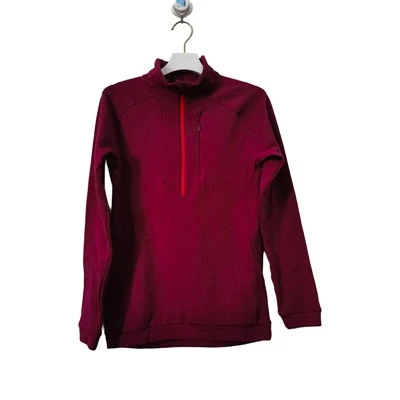
If you’re a brand making knit or woven garments, or a designer testing a new line and not sure which interfacing to use, hit us up. We’ve been in this game long enough to test interfacings, match them to fabrics, and save you from those last-minute production issues that make you pull your hair out. No generic answers, no fancy sales pitches—just real advice for making garments that look good and last.
Thermal Sportswear References:
- Joseph-Armstrong, D. (2010). Patternmaking for Fashion Design (5th ed.). Pearson Education, Inc.
- Vujosevic, M., & Popovic, D. (2018). The Influence of Interfacing Type on Woven Garment Collar Performance. Tekstilec Journal, 61(2), 112-121.
- Knitting Technology Council of America. (2021). Interfacing Standards for Stretch Knit Apparel. KTCA Technical Bulletin #07.
Yancheng Dezhiwang Garments Co., Ltd.
As one of the most professional knit and woven garments manufacturers and suppliers in China, we also support customized service. We warmly welcome you to wholesale bulk high quality knit and woven garments in stock here from our factory. For price consultation, contact us.
Address: No. 1, Xinglong Road, Xinqiao Village, Fucheng Subdistrict, Funing County, Yancheng City, Jiangsu Province, China
E-mail: ntchenguangxi@163.com
WebSite: https://www.dzwoutdoor.com/
