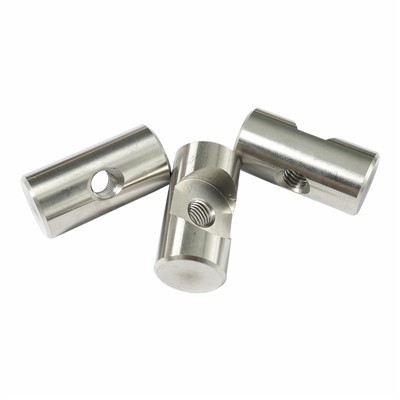
Carbon steel turned parts are a staple in many industries, valued for their durability, versatility, and cost – effectiveness. As a trusted supplier of carbon steel turned parts, I am often asked about the magnetic properties of these components. In this blog, I will delve into the science behind the magnetic behavior of carbon steel turned parts, explore factors influencing their magnetism, and discuss the implications of these properties in various applications. Carbon Steel Turned Parts
Understanding Carbon Steel and Its Magnetism
Carbon steel is an alloy primarily composed of iron and carbon, with other elements such as manganese, silicon, sulfur, and phosphorus present in smaller amounts. The magnetic properties of carbon steel stem mainly from the inherent magnetic nature of iron. Iron is a ferromagnetic material, meaning it can be strongly magnetized in the presence of a magnetic field and retain some magnetization after the field is removed.
When carbon is added to iron to form carbon steel, the carbon atoms occupy interstitial positions in the iron lattice. This affects the crystal structure of the steel and can have varying impacts on its magnetic properties. Generally, most carbon steels are ferromagnetic, but the degree of magnetism can differ based on several factors.
Factors Influencing the Magnetic Properties of Carbon Steel Turned Parts
Carbon Content
The carbon content in carbon steel plays a crucial role in determining its magnetic properties. Low – carbon steels, which typically contain less than 0.30% carbon, are highly ferromagnetic. The relatively low carbon content allows the iron atoms to align easily in a magnetic field, resulting in a strong magnetic response.
As the carbon content increases, the magnetic properties can start to change. Medium – carbon steels (with 0.30 – 0.60% carbon) and high – carbon steels (with over 0.60% carbon) may have slightly reduced magnetic permeability. The carbon atoms disrupt the regular arrangement of iron atoms, making it more difficult for the magnetic domains to align. However, even high – carbon steels remain ferromagnetic and can still be magnetized.
Alloying Elements
Apart from carbon, other alloying elements added to carbon steel can also affect its magnetic properties. For example, manganese can increase the strength and hardness of steel but has a relatively small impact on its magnetism. On the other hand, elements like nickel and chromium can have a more significant influence.
Nickel is often added to steel to improve its corrosion resistance and toughness. In small amounts, nickel can enhance the magnetic properties of carbon steel. However, at higher concentrations (above approximately 20%), nickel can convert the steel into an austenitic structure, which is non – ferromagnetic.
Chromium is used to increase the corrosion resistance of steel, as in the case of stainless steels. When a significant amount of chromium is added to carbon steel, it can form a protective oxide layer on the surface. Similar to nickel, high levels of chromium can also change the crystal structure of the steel, potentially reducing or eliminating its ferromagnetic properties.
Heat Treatment
Heat treatment is a critical process in the manufacturing of carbon steel turned parts, and it can have a profound impact on their magnetic properties. Annealing, for instance, involves heating the steel to a high temperature and then slowly cooling it. This process relieves internal stresses and promotes a more uniform grain structure. In general, annealed carbon steel has good magnetic properties because the regular grain structure allows for easier alignment of magnetic domains.
Quenching, on the other hand, involves rapid cooling of the steel from a high temperature. This can result in a hardened and more brittle structure. Quenched carbon steel may have reduced magnetic permeability compared to annealed steel due to the formation of a more complex microstructure with less – ordered magnetic domains.
Tempering is often used after quenching to improve the toughness of the steel. The tempering process can also modify the magnetic properties by further altering the microstructure of the steel. The temperature and time of tempering can be adjusted to achieve a balance between mechanical properties and magnetic behavior.
Measuring the Magnetic Properties of Carbon Steel Turned Parts
Several methods can be used to measure the magnetic properties of carbon steel turned parts. One of the most common techniques is the use of a gaussmeter. A gaussmeter measures the magnetic flux density, which is a measure of the strength of the magnetic field. By placing the gaussmeter near a carbon steel turned part, we can obtain a quantitative value of the magnetic field strength at that point.
Another method is hysteresis loop measurement. A hysteresis loop shows the relationship between the magnetic field applied to the steel and the resulting magnetization. The shape and parameters of the hysteresis loop, such as the coercivity (the magnetic field required to demagnetize the steel) and the remanence (the residual magnetization after the external magnetic field is removed), provide valuable information about the magnetic properties of the carbon steel.
Applications of Carbon Steel Turned Parts Based on Their Magnetic Properties
Electrical and Electronics Industry
In the electrical and electronics industry, the magnetic properties of carbon steel turned parts are exploited in various applications. For example, transformers and inductors often use carbon steel cores because of their high magnetic permeability. The ferromagnetic nature of carbon steel allows it to efficiently conduct magnetic flux, which is essential for the transfer of electrical energy.
Manufacturing and Machinery
In manufacturing and machinery, carbon steel turned parts are used in magnetic chucks and fixtures. These devices rely on the magnetic force to hold workpieces securely during machining operations. The strong magnetic properties of carbon steel make it an ideal material for such applications, as it can provide a reliable and adjustable clamping force.
Automotive Industry
The automotive industry also benefits from the magnetic properties of carbon steel turned parts. In electric motors and generators used in hybrid and electric vehicles, carbon steel components play a vital role. The magnetic interaction between the steel parts and the electrical coils is what drives the rotation of the motor or generates electricity.
Challenges and Considerations in Using Magnetic Carbon Steel Turned Parts
While the magnetic properties of carbon steel turned parts offer many advantages, there are also some challenges and considerations. One issue is the potential for magnetic interference. In sensitive electronic devices, the magnetic field generated by carbon steel parts can interfere with the operation of other components. To mitigate this, appropriate shielding or magnetic isolation techniques may be required.
Another consideration is the corrosion resistance of magnetic carbon steel. Since ferromagnetic carbon steels are often prone to rusting, proper surface treatment, such as coating or galvanizing, is necessary to protect the parts from corrosion, especially in harsh environments.
Conclusion
In conclusion, the magnetic properties of carbon steel turned parts are a complex but highly important aspect of their engineering. The ferromagnetic nature of carbon steel, which is primarily due to the presence of iron, makes it suitable for a wide range of applications across various industries. Factors such as carbon content, alloying elements, and heat treatment can significantly influence the magnetic behavior of these parts.
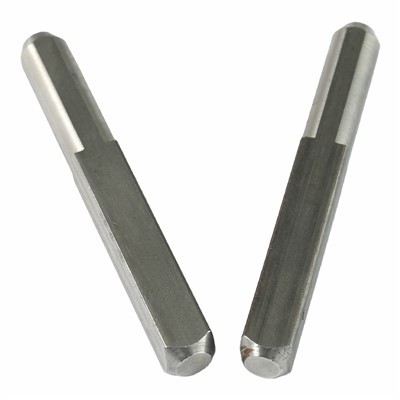
As a supplier of carbon steel turned parts, I understand the importance of these magnetic properties and how they can impact the performance of our products. Whether you need parts for electrical applications, manufacturing processes, or automotive systems, I am committed to providing high – quality carbon steel turned parts with the desired magnetic characteristics.
Stainless Steel Turned Parts If you are interested in purchasing carbon steel turned parts and want to discuss your specific requirements in detail, I invite you to reach out for a professional consultation. Together, we can find the perfect solution for your needs.
References
- ASM Handbook Committee. ASM Handbook, Volume 1: Properties and Selection: Irons, Steels, and High – Performance Alloys. ASM International, 1990.
- Callister, W. D., & Rethwisch, D. G. Materials Science and Engineering: An Introduction. Wiley, 2015.
- Degarmo, E. P., Black, J. T., & Kohser, R. A. Materials and Processes in Manufacturing. Wiley, 2003.
Huizhou Quanyi Precision Hardware Products Co., Ltd.
We’re well-known as one of the leading carbon steel turned parts manufacturers and suppliers in China, featured by quality products and good service. Please rest assured to buy customized carbon steel turned parts made in China here from our factory. Contact us for more details.
Address: Building A10, 7th Floor, Zhongchuangyingke 5G Industrial Park, Zhonghan Industrial Park, Tonghu Town, Huizhou City
E-mail: info@qycncturning.com
WebSite: https://www.qycncturning.com/
